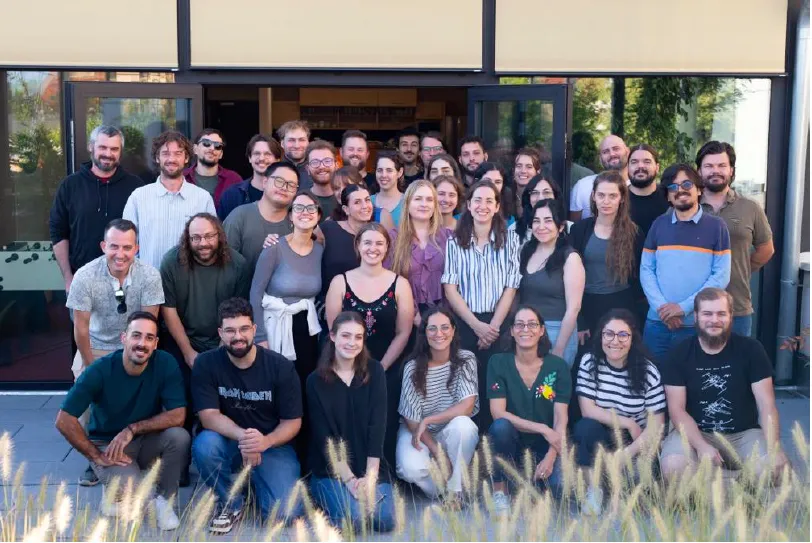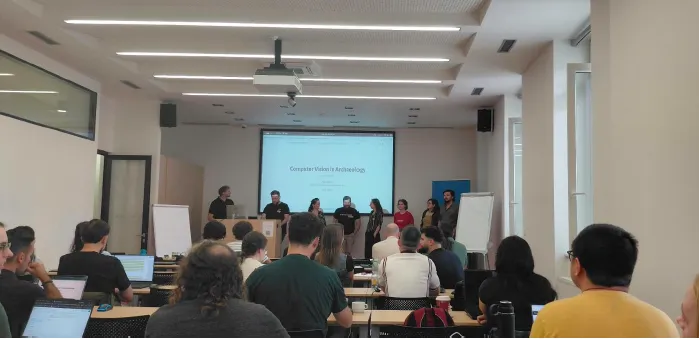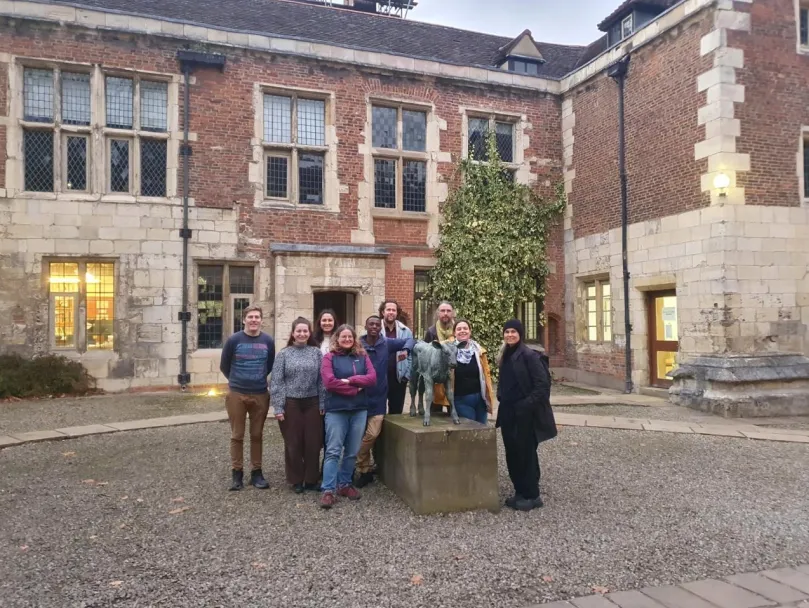
From 10 to 14 November 2025 I had the opportunity to join the Archaeology Data Service (ADS) Summer School, and although the trip was long and the weather was quite cold, the atmosphere made it completely worth it...
My name is Melissa Bergoffen. I’m currently a PhD student at the University of Crete in conjunction with the TALOS project, where I’m creating an ontological framework for female representations on artifacts from the Bronze Age Aegean...
This blog details my experience after attending the Summer School on Data Literacy in R for Students in Humanities, hosted by LINDAT/CLARIAH-CZ at Charles University in Prague from 4 to 15 August 2025...
As a linguist and postdoctoral researcher at the Consumer and Sensory Lab of the Department of Food Science and Nutrition, University of the Aegean, my work sits at the intersection of language, food, and digital communication...
I am a PhD student in Computer Science in Brazil, with research at the intersection of data science and Natural Language Processing. My work focuses on the large-scale analysis of online communication on messaging platforms, particularly WhatsApp and Telegram...
In November 2025, I travelled from Thessaloniki, Greece to the United Kingdom to participate in the ATRIUM Transnational Access (TNA) Training School, hosted at the University of York and coordinated by the Archaeology Data Service (ADS)...
A google search to determine the approximate number of archives globally reveals that it is largely unknown. This highlights the importance of this resource, as its full value and potential is priceless. ..
I had the amazing opportunity of participating in the ATRIUM 3D Models Training School organized by the Czech Academy of Sciences, Institute of Archaeology in Brno, held between the 15th and 19th of September.
Earlier this month from 13th to 20th September 2025, I, along with 17 other participants, had the privilege of attending a week-long training on 3D reconstruction at the Brno Institute of Social Sciences in the Czech Republic.
It is a hard lesson to learn but “being lazy and impatient” is a trait ONLY for the gifted. This is the take home lesson from the ATRIUM 3D Models Training School 2025 in the Czech Republic. The one week training took place between the 15th to the 19th of September 2025 and was hosted at the Institute of Archaeology, Czech Academy of Sciences, Brno.
During the week of September 15 – 19, I had the opportunity to attend the ATRIUM 3D Summer School, hosted by the Institute of Archaeology of the Czech Academy of Sciences in Brno...
From the 15 to 19 September 2025, I had the opportunity of joining the ATRIUM summer school on 3D models in archaeology at the Institute of Archaeology of the Czech Academy of Science, Brno. For one week I could learn how to create 3D models of archaeological artefacts and historic monuments through photogrammetry and laser scanning, as well as how to process and manage them.
In September 2025, I had the opportunity to attend the ATRIUM 3D Summer School at the Institute of Archaeology of the Czech Academy of Sciences in Brno, Czechia.
During the second week of September (15th–19th), I had the privilege to attend the ATRIUM 3D Summer School in Brno, hosted by the Institute of Archaeology of the Czech Academy of Sciences.
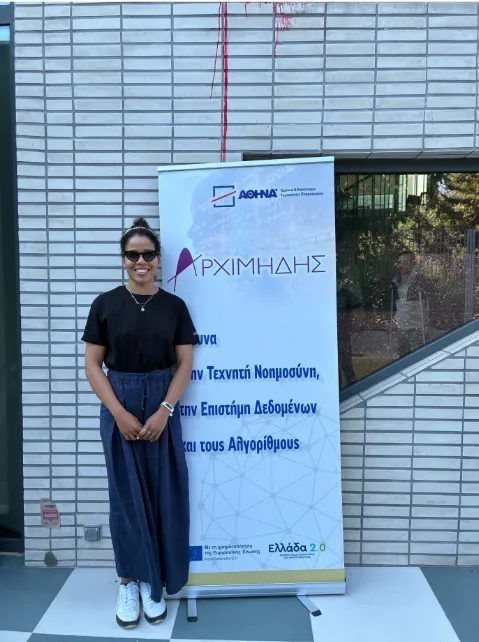
From July 6 to 18, 2025, I had the opportunity and the pleasure to spend two weeks as an ATRIUM TNA Individual Access fellow at the Athens University of Economics and Business, Greece.
From May 25 to June 8, 2025, I had the opportunity and the pleasure to spend two weeks as an ATRIUM TNA Individual Access fellow at the Austrian Centre for Digital Humanities and Cultural Heritage (ACDH-CH) of the Austrian Academy of Sciences. My project focused on exploring the use of controlled vocabularies as a systematic approach for annotating historical maps, bringing consistency and reusability to the process of describing features on late 18th and early 19th century maps of Greece and the Balkans.
Introduced in early 2023, the “archeoViz ecosystem” is a newcomer in the landscape of archaeological data publication, reuse, online editing and dissemination. It is composed of the archeoViz (R package) and an online application offering an interactive catalogue of the existing applications of archeoViz to specific archaeological datasets.
As a postdoctoral researcher at the Consumer and Sensory Lab of the Department of Food Science and Nutrition of the University of the Aegean, Greece, I study food consumption-related phenomena and consumer expression on social media.
ATRIUM's Transnational Access Scheme grants offer fully funded placements across Europe for researchers. It offers the possibility to visit a country and work at a research host institution during a period of 1-2 weeks.
Peter Chege Gathoni from Nairobi, Kenya and [the British Institute in Eastern Africa, reports on his week at the Archaeological Data Service at University of York.
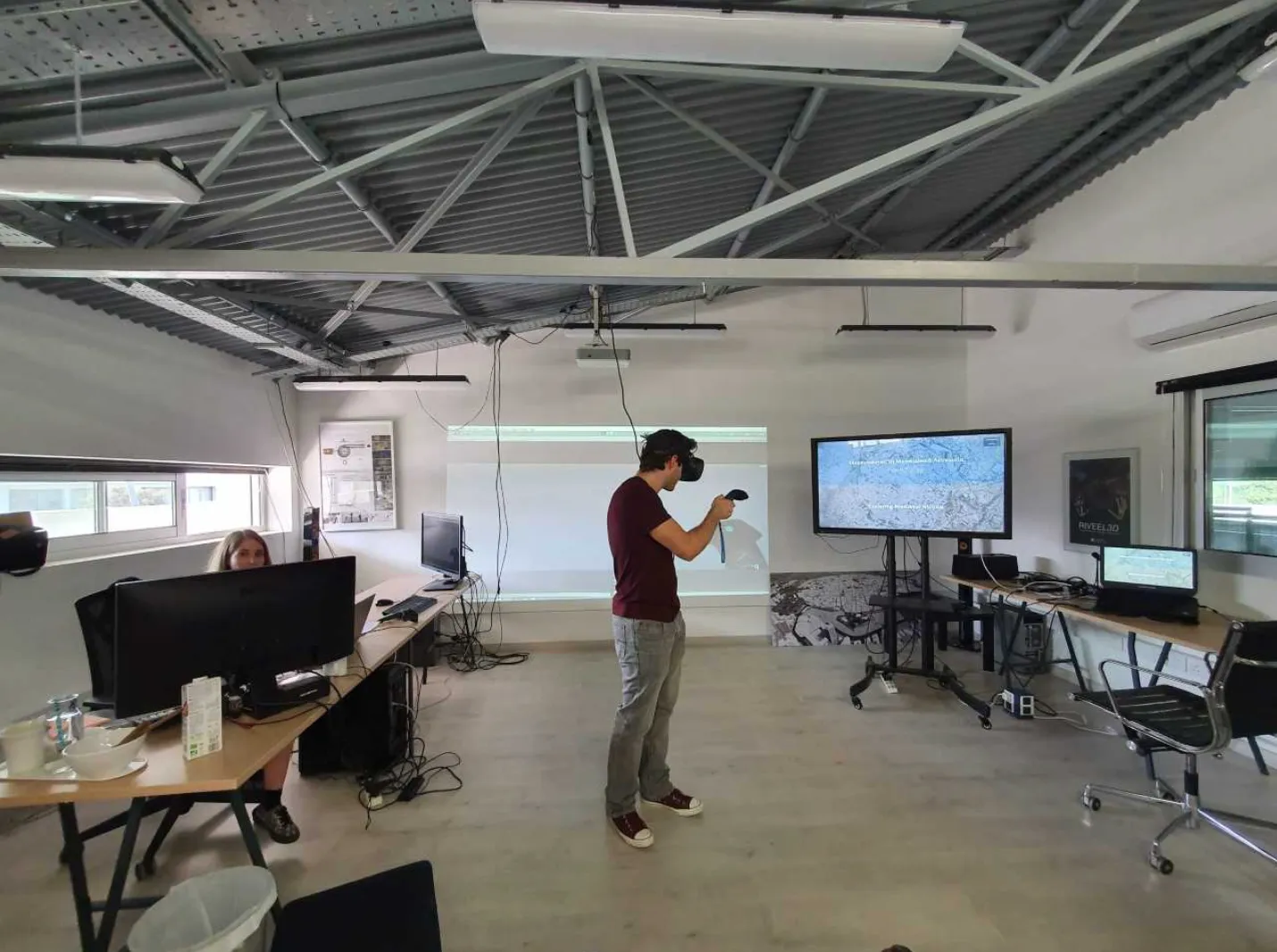
By joining the ATRIUM Project Transnational Access Scheme (TNA), I was able to actively participate in relevant research activities ongoing at the Cyprus Institute, an experience that turned out to be enlightening and transformative. During my TNA at the VELab, I had the opportunity to understand better the specialized field of Heritage Building Information Modeling (HBIM).
The ATRIUM Training School in Computational Archaeology is one of the highlights of my summer. When I found out about ATRIUM's Transnational Access Scheme grant, I knew I couldn't let this opportunity slip. But the real hook was the Summer School at the Czech Academy of Sciences in Brno: spatial data analysis, integrated archaeological data, and reproducible coding skills in R.
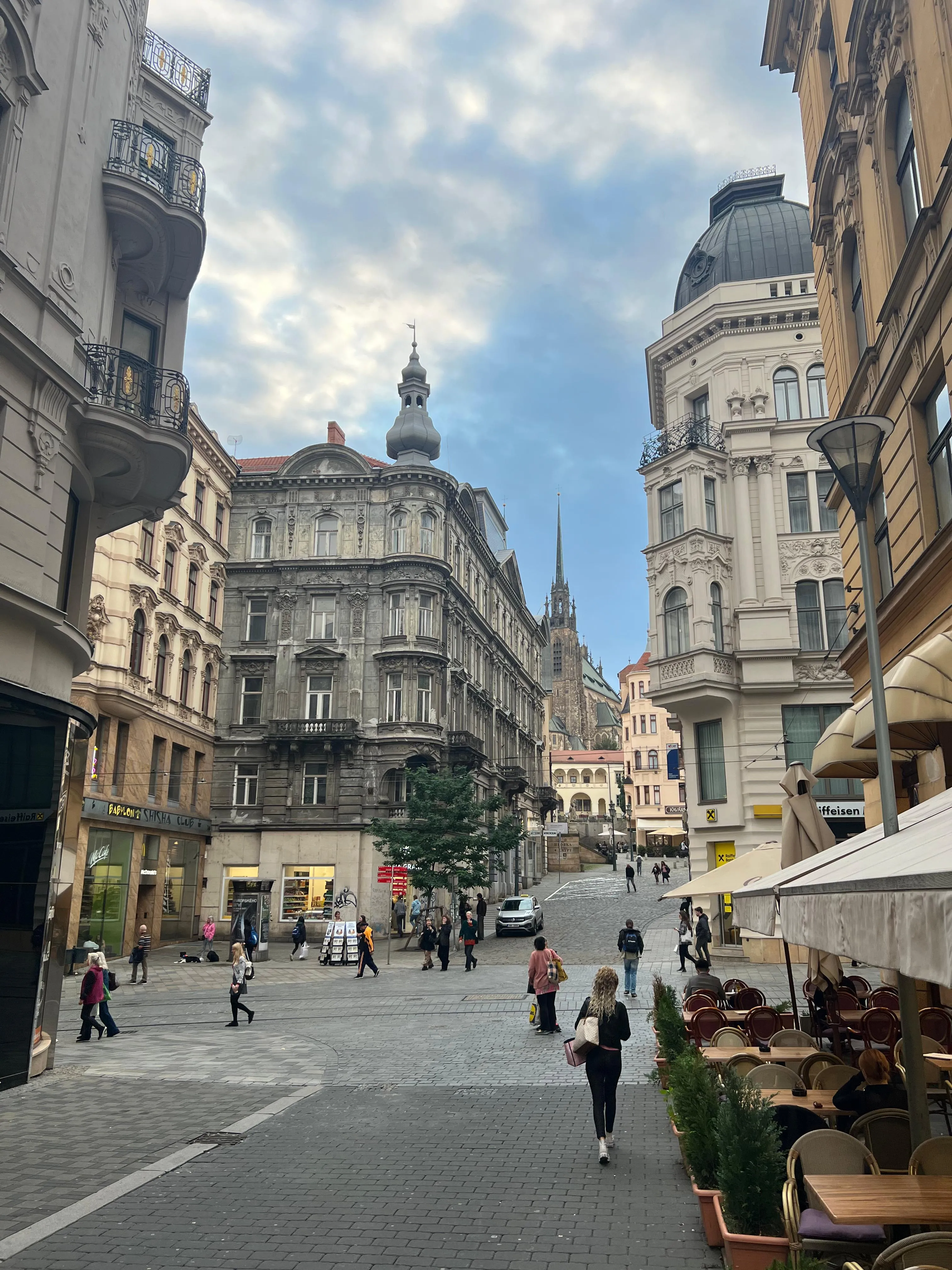
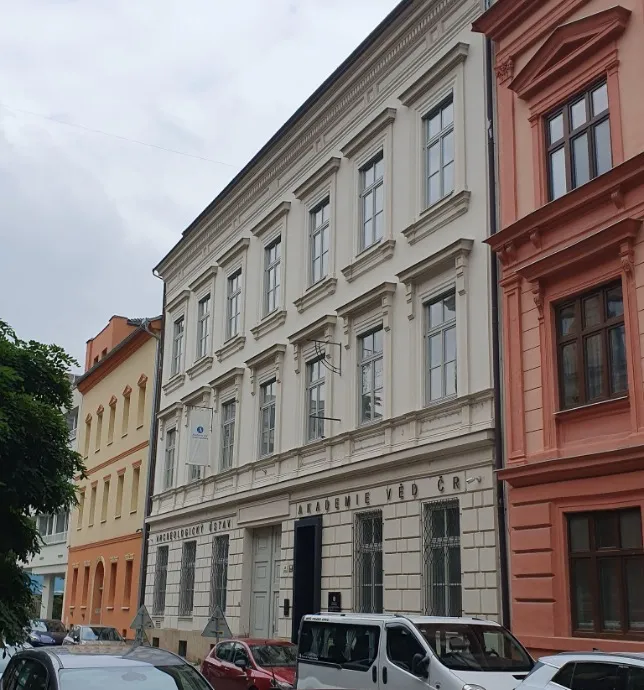
I've just returned from a visit to Brno, the second largest city in the Czech Republic, to attend a Computational Archaeology Summer School hosted by the Archaeological Information System of the Czech Republic (AIS CR) research infrastructure at the Institute of Archaeology, Czech Academy of Sciences, Brno. This five day training school brought together experts in coding skills, the R programming language, the archaeological data integrated into the ARIADNE research infrastructure, and spatial data analysis.